
How Thrift Organizations Are Using AI to Sort Donations Smarter
October 15, 2026
The 7 Numbers Every Thrift Store Operator Should Know
October 28, 2026
What Thrift Store Items Should Be Sold Online vs. In Store?
In this article
What thrift store items should be sold online?
Items with higher expected value, limited local demand, strong online buyer interest, or niche appeal are good e-commerce candidates. Rare collectibles, jewelry, musical instruments, designer goods, specialty electronics, and other items that are easy to store and ship often benefit from the wider audience available online.
What is the thrift store donation sorting process?
Donation sorting usually starts by quickly evaluating an item’s condition, category, potential value, and best sales channel. From there, items may be routed to the retail floor, e-commerce, outlet, recycling, or another recovery channel. The goal is to make that decision early enough to keep inventory moving without missing valuable items.
How do Goodwill stores sort donations?
Goodwill sorting practices vary by local organization because each regional Goodwill operates independently and sets its own policies. In general, donated goods are evaluated and routed through multiple sales or recovery channels, which can include retail stores, outlet stores, e-commerce, reuse, and recycling. Goodwill says its network uses multiple retail channels to keep donated goods in circulation longer.
How do thrift stores decide between retail and e-commerce inventory?
The decision usually depends on several factors working together: expected selling price, local and online demand, category, rarity, size, shipping economics, storage requirements, and the amount of research or processing needed to sell the item. The best channel is the one that gives the donation the strongest opportunity to generate value without adding unnecessary cost or delay.
Every Donation Needs a Best Next Destination
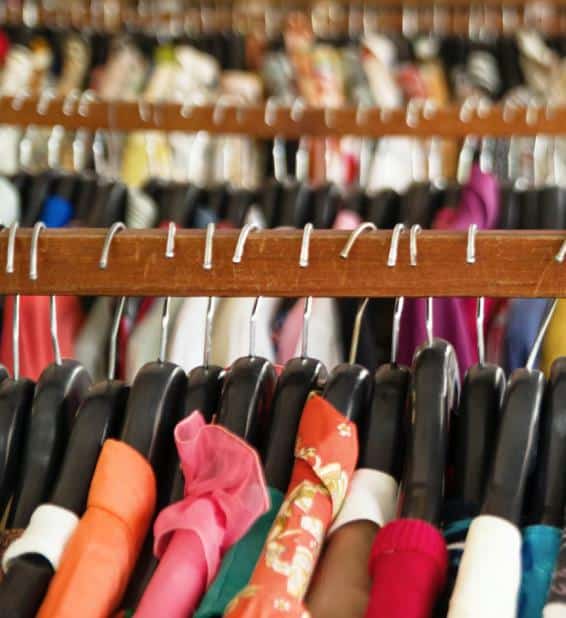
Thrift retail is as much a routing business as it is a pricing business.
Every donated item has to go somewhere: the retail floor, e-commerce, an outlet, another reuse channel, recycling, or in some cases, disposal. The challenge is making that decision quickly enough to keep inventory moving while still recognizing the items that could generate significantly more value in another channel.
That challenge exists at enormous scale. Goodwill reported keeping 4.6 billion pounds of donated goods in circulation in 2025 across its network of local organizations, retail and outlet stores, and online marketplaces. Goodwill describes its own process as sorting goods and routing them to their “highest and best use,” including resale, repair, remanufacturing, and recycling.
For thrift operators, that makes sorting more than a back-room task.
It is one of the earliest revenue decisions in the entire donated-goods workflow.
Speed and Accuracy in the Thrift Donation Sorting Process
The donation sorting process has to balance two competing priorities:
- Move inventory quickly:
Donated goods need to get out of processing areas and into productive sales channels without creating backlogs. - Make the right routing decision:
An item that looks ordinary at first glance could be a rare collectible, premium brand, or high-value product that performs much better online than on a local sales floor.
Spend too much time researching every donation and production slows down.
Move too quickly and high-value items can be misidentified, underpriced, or routed to a channel where they never reach their strongest buyer audience.
The goal isn’t perfect research on every item, but to make the best possible decision with the least amount of unnecessary processing time.
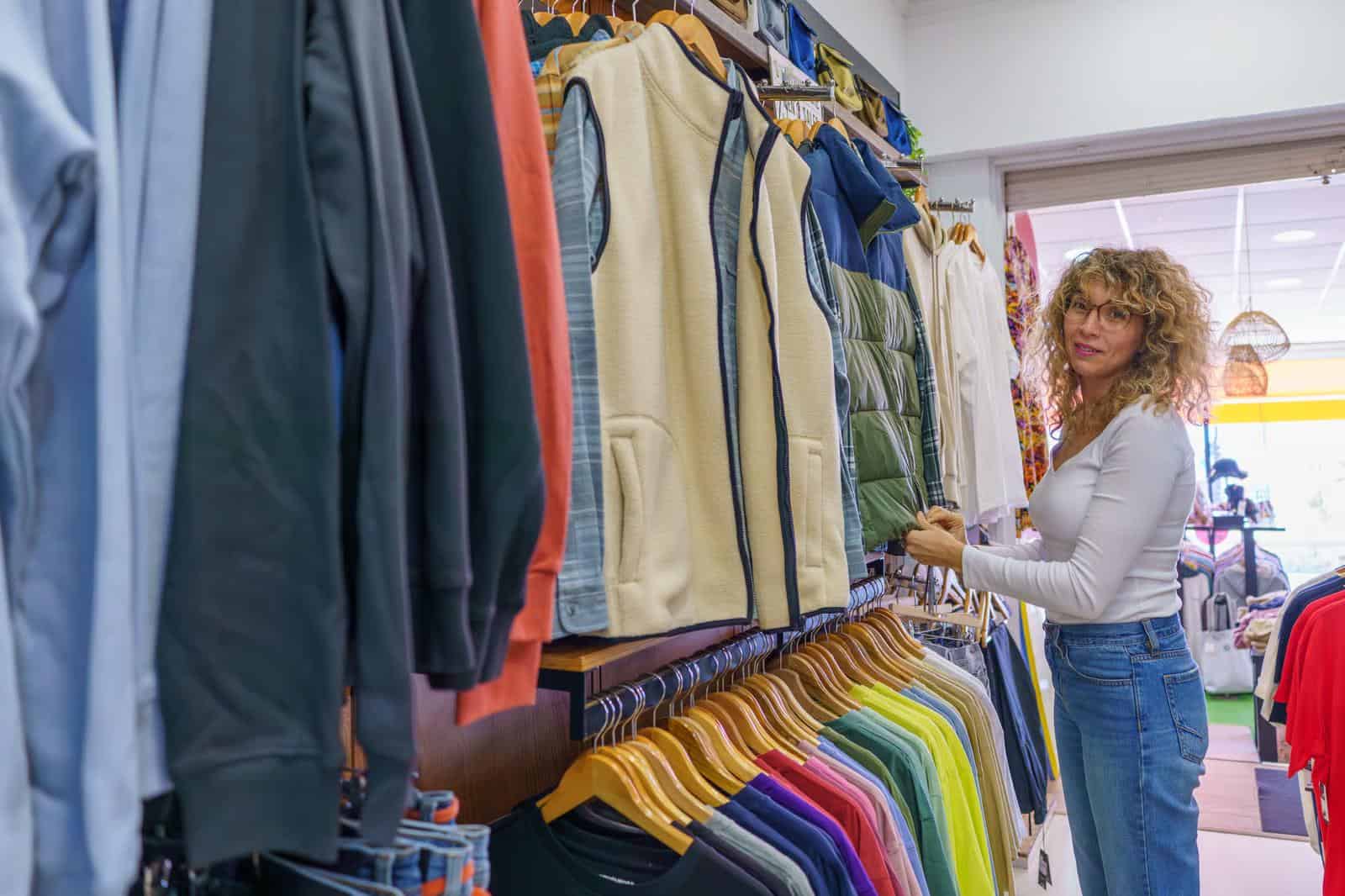
Other Routing Destinations for Thrift Donations
Retail and e-commerce aren’t the only destinations available.
Many thrift organizations use multiple recovery channels to extend an item’s useful life and recover additional value from inventory that does not sell in its first destination.
For many secondhand organizations, those channels can include traditional retail stores, e-commerce, outlet stores, reuse partners, and recycling. Goodwill operates retail and outlet locations alongside online marketplaces, although outlet availability and operating practices vary by local organization.
At outlet locations, merchandise may be sold at steep discounts or by weight. Goods that cannot be resold may move into repair, reuse, remanufacturing, textile recovery, or recycling programs rather than immediately entering the waste stream. Goodwill says its broader model is designed to route goods toward their highest and best use for as long as practical.
That creates a broader item lifecycle:
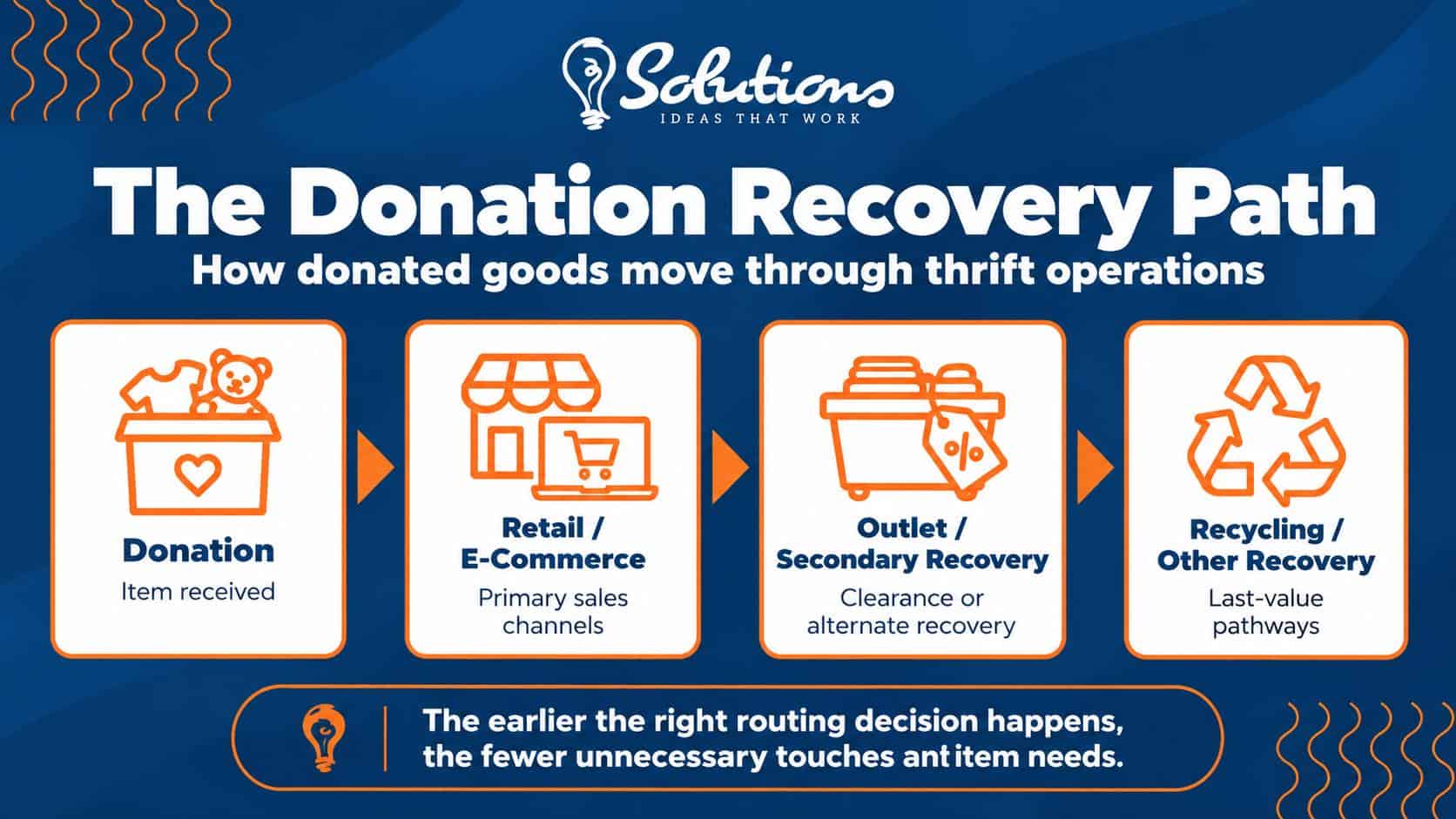
Donation → Retail / E-Commerce → Outlet / Secondary Recovery → Recycling / Other Recovery
However, the first major routing decision most operators face:
Should this item go to the sales floor or online?
Does This Go to E-Commerce or the Sales Floor?
Many thrift organizations use category rules, value thresholds, employee training, reference guides, or other internal standards to help employees make routing decisions consistently.
One organization might automatically review musical instruments for e-commerce. Another might set different thresholds by category, brand, store, or expected selling price.
Technology is adding another layer to that process. AI-assisted sorting tools can give employees additional product identification, market, and pricing context while the item is still being evaluated.
Regardless of the method, the operating goal is the same.
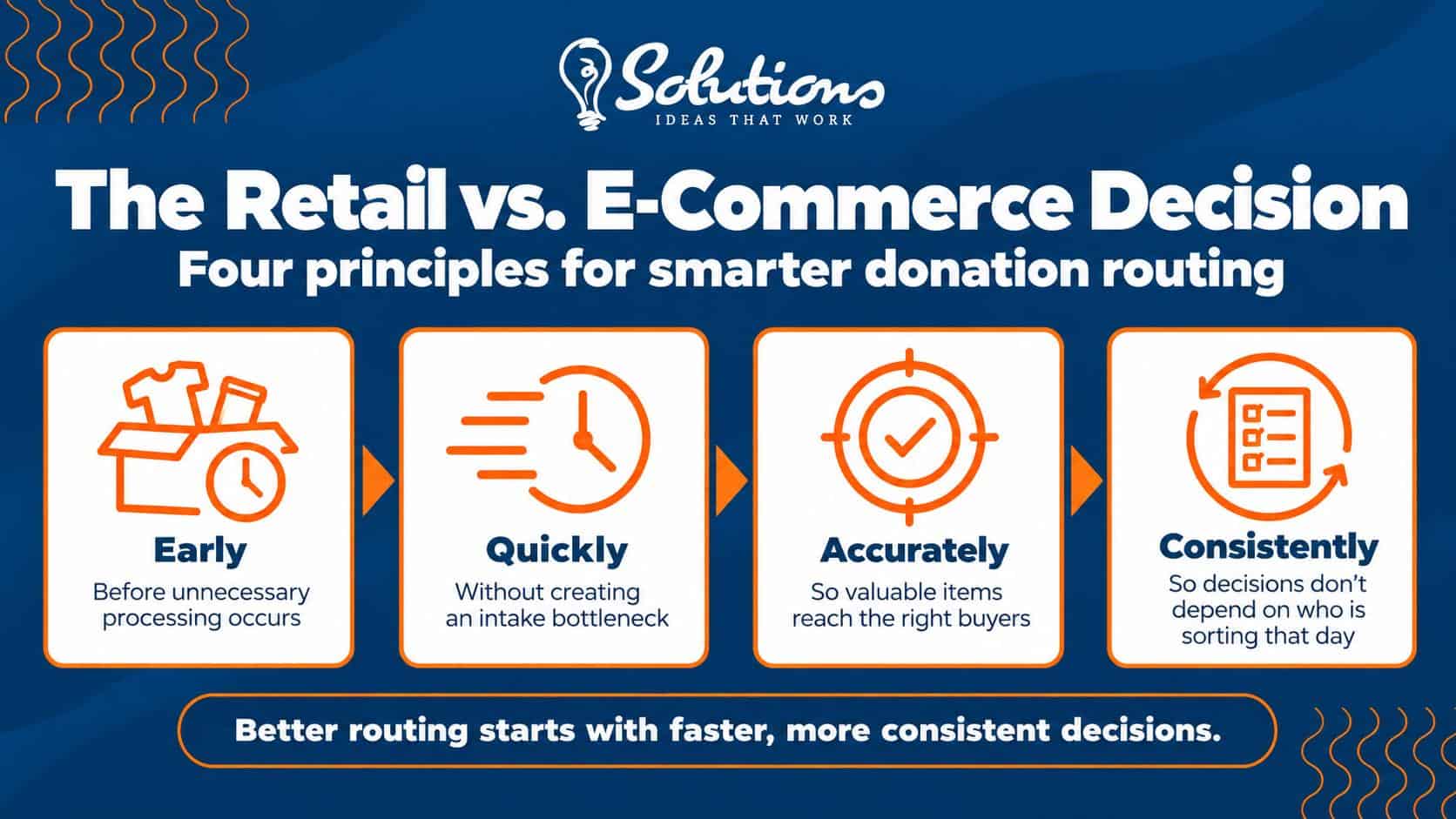
The retail-versus-e-commerce decision should happen:
- Early: Before unnecessary processing occurs
- Quickly: Without creating an intake bottleneck
- Accurately: So valuable items reach the right buyers
- Consistently: So the decision doesn’t depend entirely on who happens to be sorting that day
So, what actually determines the best sales channel? Five factors matter most: Expected value, category, rarity, selling logistics, and buyer demand.
Let’s look at each one and how it changes the retail-versus-e-commerce decision.
5 Factors That Determine Whether a Thrift Item Goes Online or In Store
1. Expected Value
Expected selling price is usually the first filter, but there shouldn’t be one universal dollar threshold for every thrift operation.
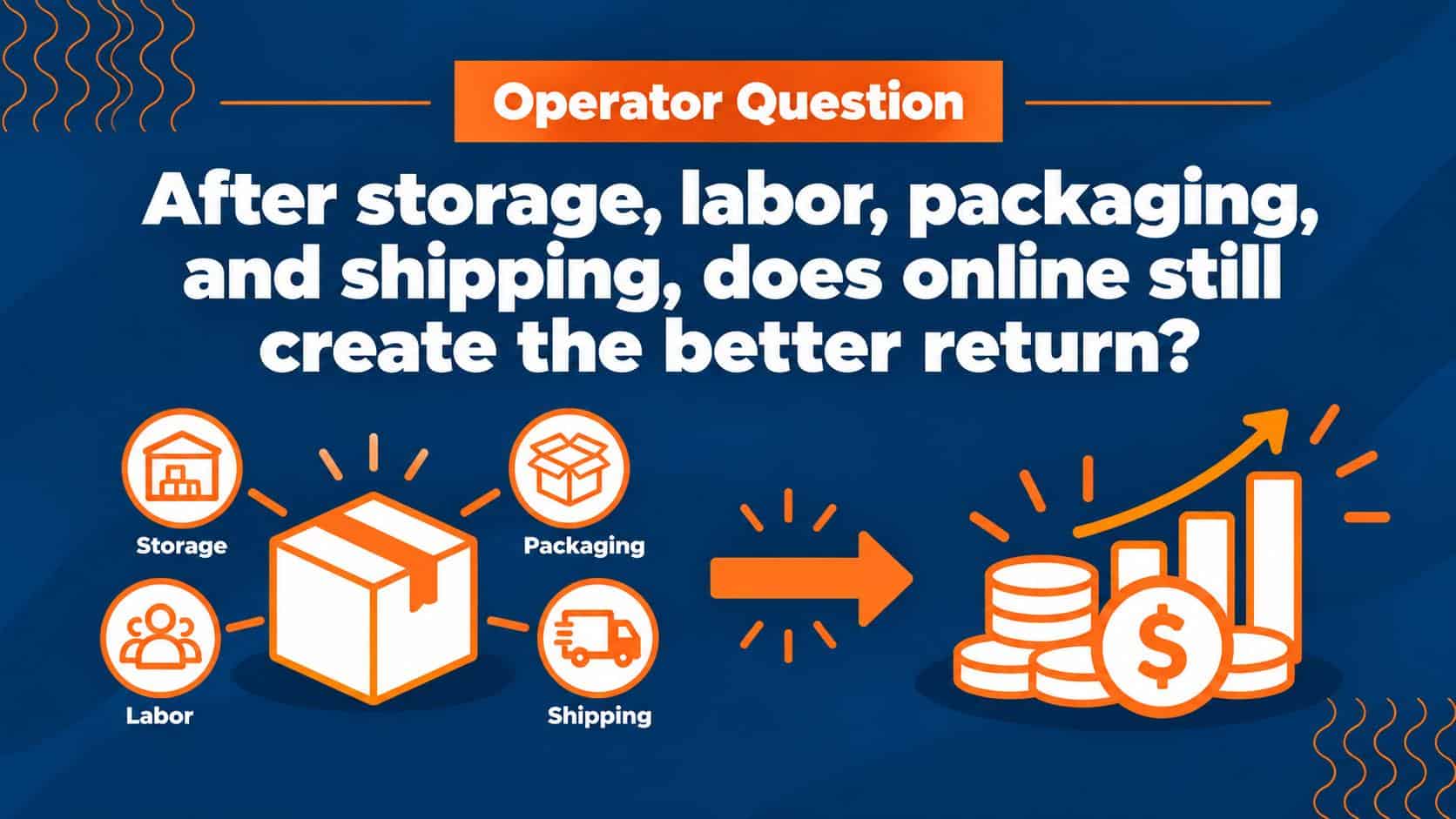
A $20 item may be worth listing online for one organization and unprofitable for another depending on labor costs, marketplace fees, shipping, packaging, storage, and listing efficiency.
That’s why the better question is:
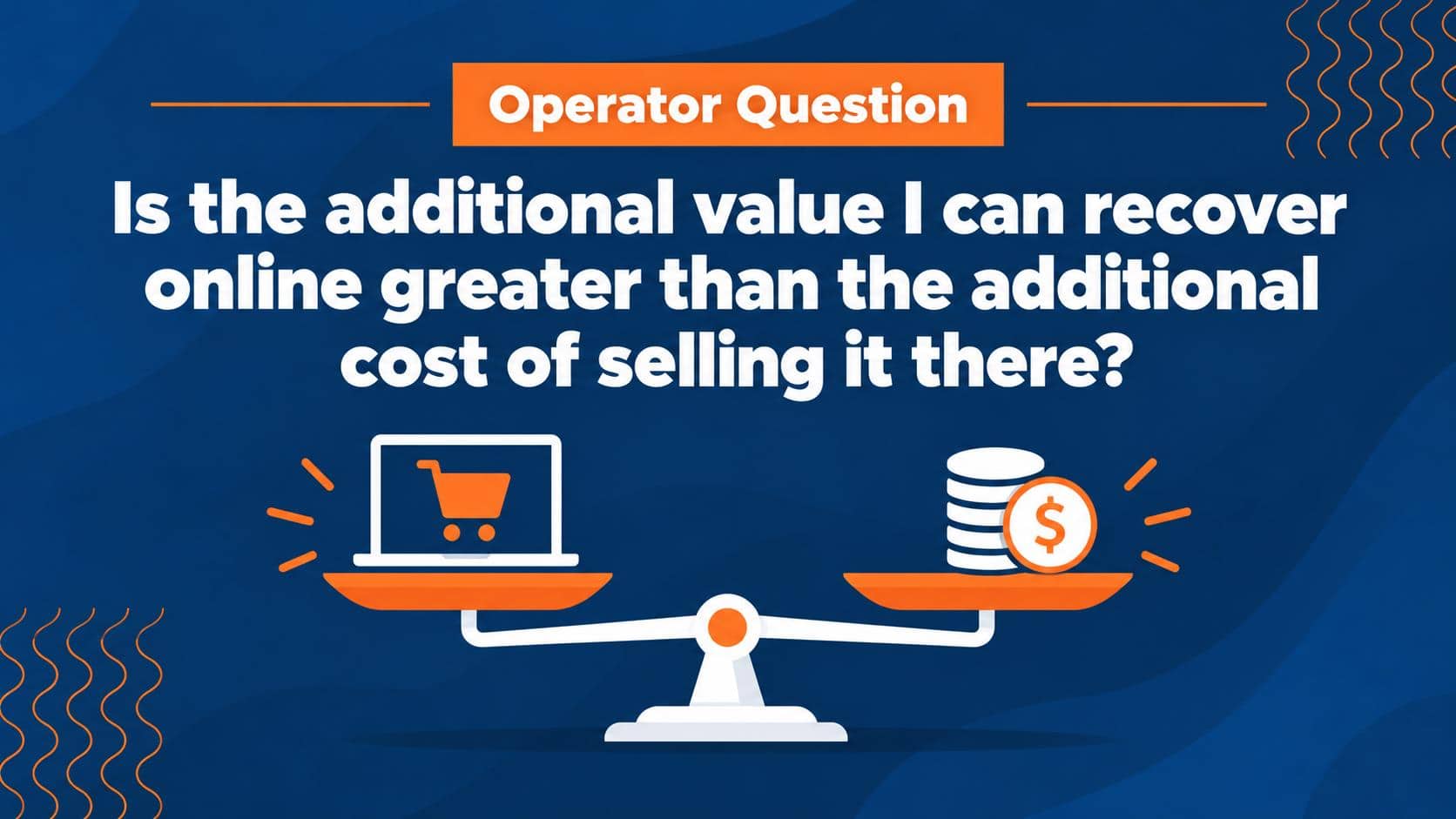
Will the expected online selling price justify the added cost of e-commerce?
Retail and e-commerce both require an item to be evaluated and priced. Online inventory typically adds more steps, including photography, listing creation, storage, packing, marketplace fees, and shipping.
Upright Labs’ own analysis of thrift e-commerce economics makes the same point: market value alone doesn’t determine whether an item belongs online. The sale also has to cover listing labor, fulfillment labor, packaging, shipping, platform fees, and its share of operating costs.
For that reason, many thrift organizations establish category-specific minimum values rather than one blanket e-commerce threshold.
A $30 piece of jewelry that takes seconds to store and ship may make sense online.
A $30 floor lamp that requires special packaging and expensive shipping probably does not.
2. Category
Category is a useful shortcut because some types of merchandise consistently have stronger online buyer pools.
Across more than 20 million orders processed through Upright Lister, electronics have been one of the strongest categories by both revenue and volume. Branded apparel and footwear also perform consistently, while collectibles, jewelry, sporting goods, books and media, and specialty home goods all contribute meaningful online sales.
Goodwill’s own online marketplace reflects that range. ShopGoodwill features hundreds of thousands of items at any given time across categories including jewelry, musical instruments, clothing, books, records, sports, toys, home décor, and art.
That makes categories such as these natural e-commerce review candidates:
- Jewelry and watches
- Musical instruments
- Gaming systems and electronics
- Collectibles and memorabilia
- Designer, luxury, and sought-after vintage apparel
- Specialty sporting goods
- Unusual or premium home goods
Meanwhile, predictable, lower-value merchandise with strong local demand often performs efficiently on the sales floor.
That can include:
- Everyday clothing
- Common housewares
- Basic kitchenware
- General décor
- Commodity books
- Large furniture
But category should be a starting point, not an automatic rule.
A typical paperback may belong in-store, while a signed first edition may deserve additional research. An ordinary jacket may be retail inventory, while a rare vintage version of the same category could have a much stronger online market.
3. Rarity
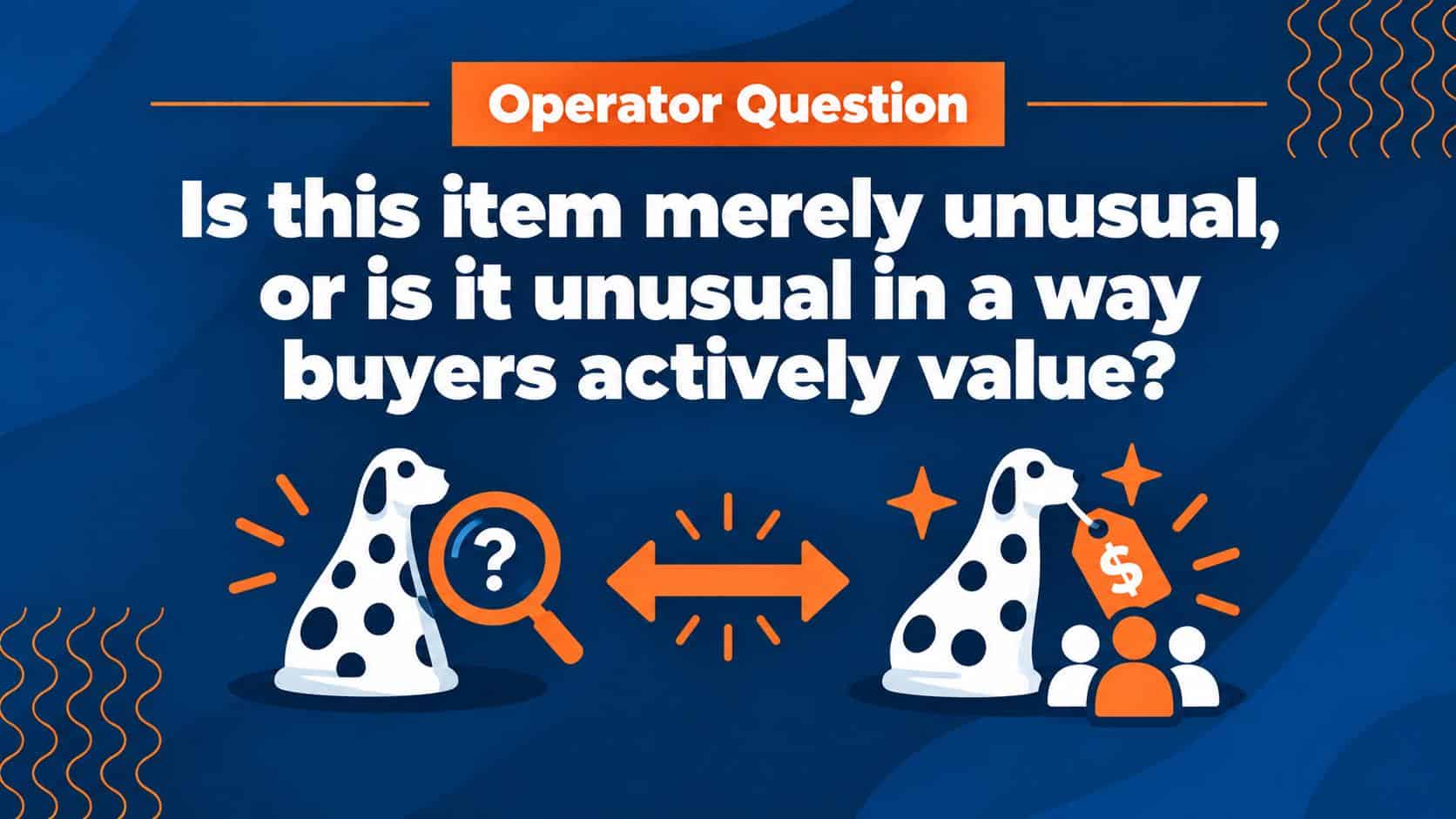
Rarity should trigger additional evaluation, not an automatic “send it online” decision.
Rare, unusual, vintage, signed, limited-edition, or difficult-to-identify items often benefit from e-commerce because online marketplaces expose them to a much larger pool of specialized buyers.
Rarity alone does not guarantee demand.
A one-of-a-kind item with no meaningful buyer audience may still struggle to sell online. On the other hand, a scarce collectible with active demand can perform significantly better when buyers outside the local market can find it.
Follow this formula:
Scarce + identifiable + demonstrable buyer interest
Consider books. Most donated books may be better suited for retail or a dedicated books channel. But a signed first edition, scarce printing, or collectible title deserves additional research before it is routed.
The same logic applies to apparel, art, instruments, toys, sports memorabilia, and electronics.
4. Selling Logistics
A strong online selling price can quickly lose its advantage if the item is expensive or difficult to process. Before routing something to e-commerce, consider:
- Shipping weight and dimensions
- Packaging requirements
- Fragility
- Storage space
- Research time
- Photography requirements
- Fulfillment complexity
Large, heavy, fragile, or awkward merchandise is often more efficient to sell locally because the buyer effectively handles the final-mile logistics.
Furniture is the obvious example, but logistics shouldn’t become another blanket rule either.
A bulky item with unusually high online value may still justify the added work, especially if the organization supports local pickup, freight, or specialized fulfillment.
Compact merchandise has the opposite advantage. Jewelry, cards, small collectibles, apparel, and many electronics are relatively easy to store while exposing them to a national buyer audience.
Shipping economics matter because marketplace demand alone doesn’t determine profitability. eBay’s Product Research tools, for example, provide sellers with actual sold prices, sell-through rates, sales trends, and average shipping costs—allowing operators to evaluate demand and fulfillment economics together.
5. Buyer Demand
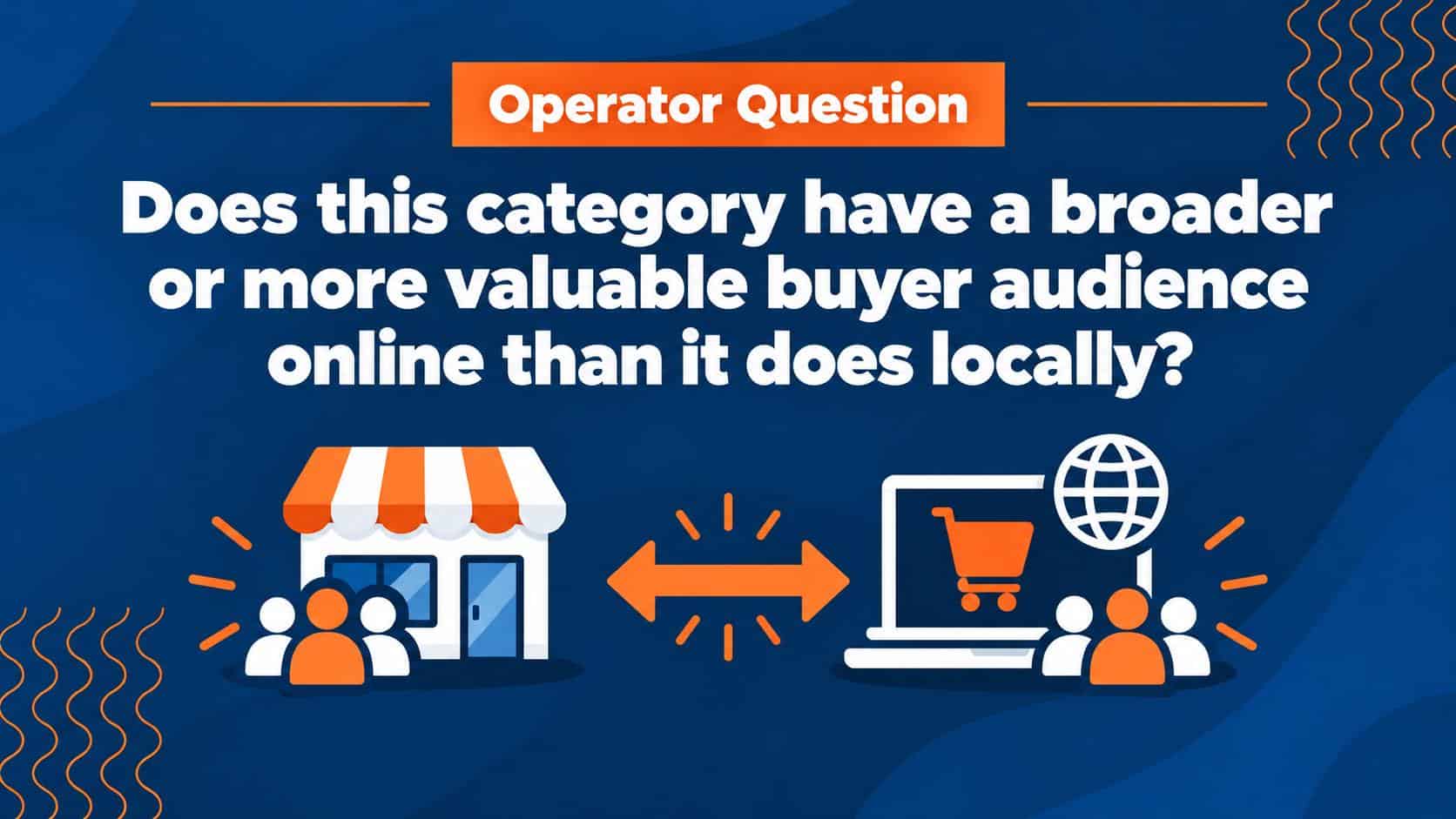
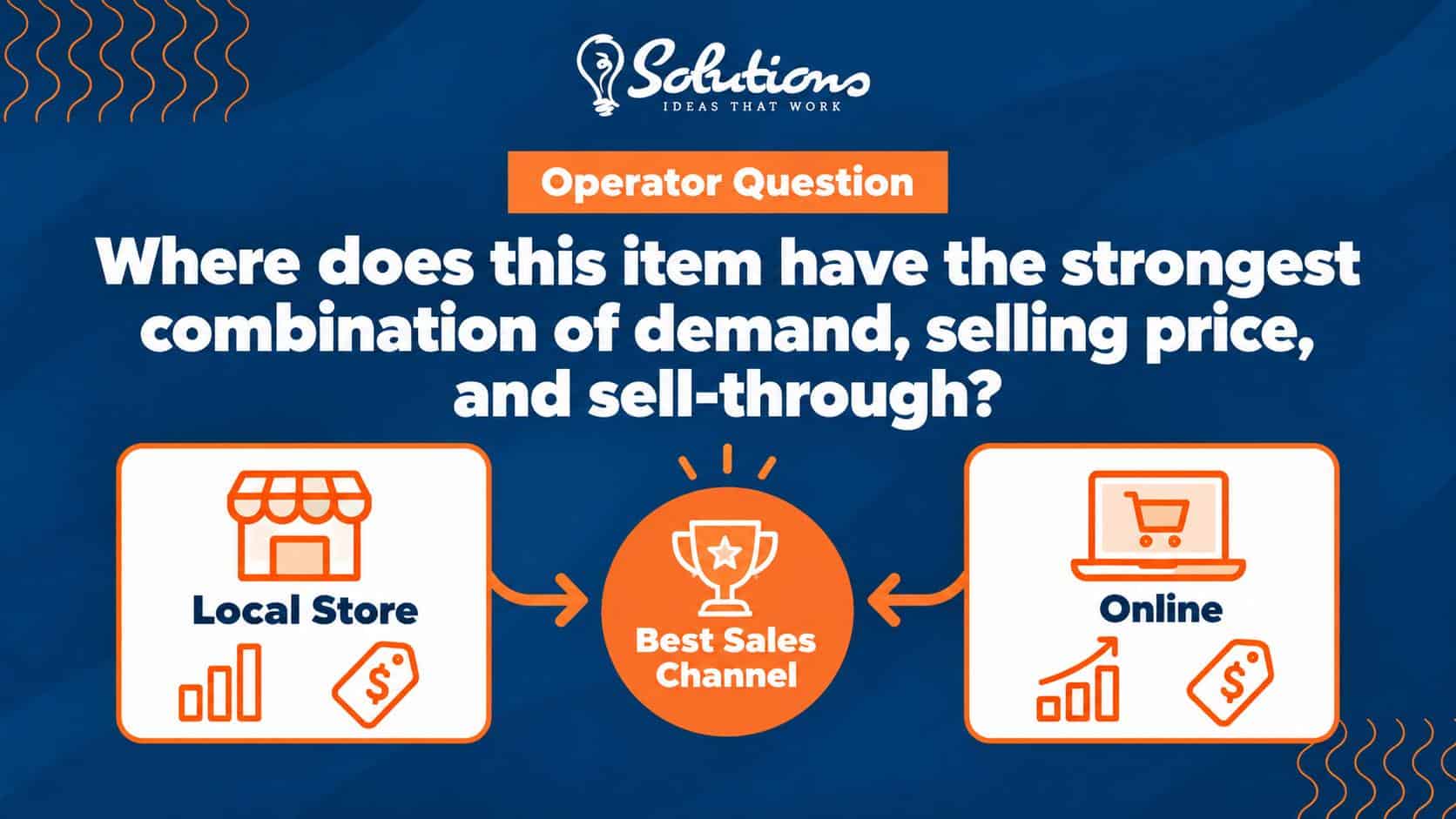
Demand may be the most important factor because the same item can have very different value depending on the audience. Start with local demand.
Your POS data can tell you:
- Which categories sell quickly
- Which products require frequent markdowns
- Which stores outperform others in a category
- How seasonality changes sell-through
- Which price points move most efficiently
If winter coats consistently sell quickly at full price in November, sending standard coats online may add unnecessary processing.
If a niche collectible repeatedly sits on local shelves, e-commerce may offer a better opportunity by opening the item to buyers across the country. Then compare that local performance with online demand.
eBay’s Product Research includes actual sold prices, price ranges, sell-through rates, sales volume, and the number of sellers offering comparable merchandise. Its Sourcing Insights tools can also identify categories with high demand and relatively low supply and show seasonal demand trends.
The strongest routing decisions combine both sources:
Your own sales data tells you what works locally. Marketplace data tells you what buyers want online.
Make Better Routing Decisions at Intake
The best routing rules only work if employees can apply them quickly and consistently.
pearldive Ama Sorter gives intake teams thrift-specific AI support to identify items, evaluate potential value, and recommend whether merchandise should go to retail, e-commerce, or additional review. Organizations can also configure rules around categories, value thresholds, and their own operating priorities.
For items routed online, Upright Lister helps move inventory through research, listing, marketplace management, and fulfillment with less manual work. Goodwill Easterseals Miami Valley, for example, increased listing output from roughly 1,000–1,200 items per week to 1,700–1,900 after adopting pearldive within its Upright workflow.
Solutions ITW connects those decisions back to the retail operation through production, POS, and reporting data.
Together, the goal is to make the right routing decision earlier, move the item through the right workflow faster, and learn from what actually sells.
Learn more about The Complete Thrift Ecosystem or estimate the potential impact of smarter sorting with the pearldive Ama Sorter ROI Calculator.